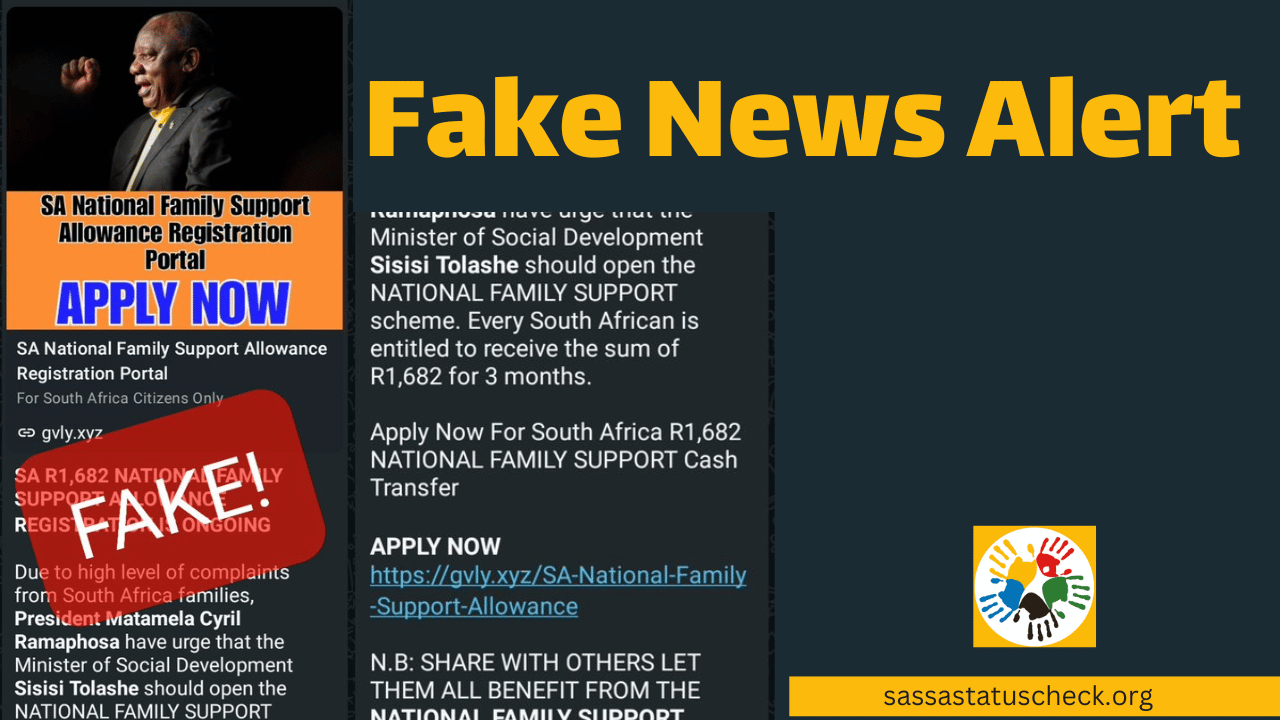
This Fake News Alert is aimed at helping South African SASSA beneficiaries and the public identify and avoid misleading grant information circulating on social media.
Recently, fake SASSA updates, fabricated “allowance schemes,” and fraudulent links have been widely shared online, misleading vulnerable citizens.
Understanding how to verify official information is essential for safety and financial protection.
Fake News Circulating About New “Family Support Allowance” Grants
A viral post has been shared online claiming that South Africans can apply for a so-called R1,682 National Family Support Allowance through a third-party website.
The post includes edited visuals, mentions government officials, and urges users to click suspicious links. It promises cash transfers for three months, which is a common tactic used in scam messaging.

This type of fake news mimics government grant announcements, creating urgency and encouraging unsuspecting users to click and share.
These tactics are common techniques in misinformation and phishing scams.
How to Identify Fake SASSA Information and Scam Portals
To avoid falling victim to fraudulent links, always check for the following signs:
• Unverified Website Domains (e.g., .xyz, .site, .life, .click, etc.)
• Urgent Messaging designed to pressure users into acting quickly
• Requests for Personal Information such as ID numbers or banking details
• Unusual Allowance Names not recognized by government
• Poor Grammar and Formatting in the content
• No Official Branding or Source Links
• No Confirmation on Official SASSA Channels
These red flags are common across multiple fake news campaigns targeting beneficiaries and unemployed individuals.
Official SASSA Grants and Where to Verify Information
To verify whether a grant exists, always cross-check information through:
✓ SASSA official website
✓ Social Development official channels
✓ Government media statements
✓ Local municipality pages
✓ Credible news organizations
Official communication does not come through random WhatsApp broadcasts or anonymous social media pages.
Secondary contextually related SEO phrases used:
• misinformation South Africa
• SASSA scam alert
• verify SASSA information
• government notice South Africa
Why Fake Grant Information Spreads So Fast
Fake grant updates spread quickly because they target:
• Beneficiaries seeking financial assistance
• Households dealing with poverty and unemployment
• Elderly citizens who rely on monthly grants
• Youth searching for new social programs
These scams exploit emotional triggers like hope, urgency, and fear of missing out.
Are There Any New Government Allowances?
If there are new social programs, they are always introduced through official press briefings, parliamentary communications, and verified media outlets — never via anonymous viral posts.
How to Protect Personal Information Online
To stay safe:
• Never enter personal details on unknown websites
• Do NOT click unsolicited links
• Do NOT share scams “just in case”
• Report suspicious content
• Help educate others (especially elderly relatives)
Suggested visual:
Short infographic with 5 scam-avoidance steps for SASSA beneficiaries.
Conclusion
Fake SASSA grant updates create confusion and put beneficiaries at risk of identity theft and fraud. Always verify information through official channels before applying for any grant or allowance.
Protect yourself by staying informed, checking reliable sources, and warning others in your community.
Share this Fake News Alert to help other South Africans stay protected and informed.
FAQs
u003cstrongu003eIs the R1,682 National Family Support Allowance real?u003c/strongu003e
No. There is no official SASSA or government program offering such a grant. It is fake news.
How do I know if a SASSA update is legitimate?
Check official SASSA platforms or government announcements — not random WhatsApp messages or unverified links.
Are all SASSA services free?
Yes. SASSA does not charge for applications, enquiries, or updates. If someone charges a fee, it is likely a scam.
Why do scammers target SASSA beneficiaries?
Because they know many households depend on grants and may act quickly when promised financial relief.
What should I do if I already shared my information?
Contact SASSA or your bank immediately and report it for possible fraud prevention.